

When I was landscaping my home lawn in New York, I realised grass is an important choice that impacts the overall appearance.
On my visit to the nursery, I explained to the staff what I was looking for and he asked me to make a choice between Tall Fescue Vs Fine Fescue. They both appear the same at first sight, but eventually, I was surprised to discover their differences.
Tall fescue and Fine fescue are cool-season grasses yet they have varied traffic tolerance, heat tolerance and maintenance needs. Tall fescue has wide and coarse blades that requires maintenance for greenery.
On the other hand, Fine fescue is heat and traffic-sensitive with fine and needle-like blades and is best suited for low-maintenance and shady areas.
It was hard for me to make a choice, so I also checked tall fescue vs fine fescue pictures online to get an idea and I went ahead with tall fescue grass for my lawn.
To understand the difference between Tall Fescue Vs Fine Fescue Grass, you should compare them first with all their visuals and characteristics contrast.
If you choose the relevant type of fescue for your space, then you can achieve a durable and vibrant space.
What Is Tall Fescue?
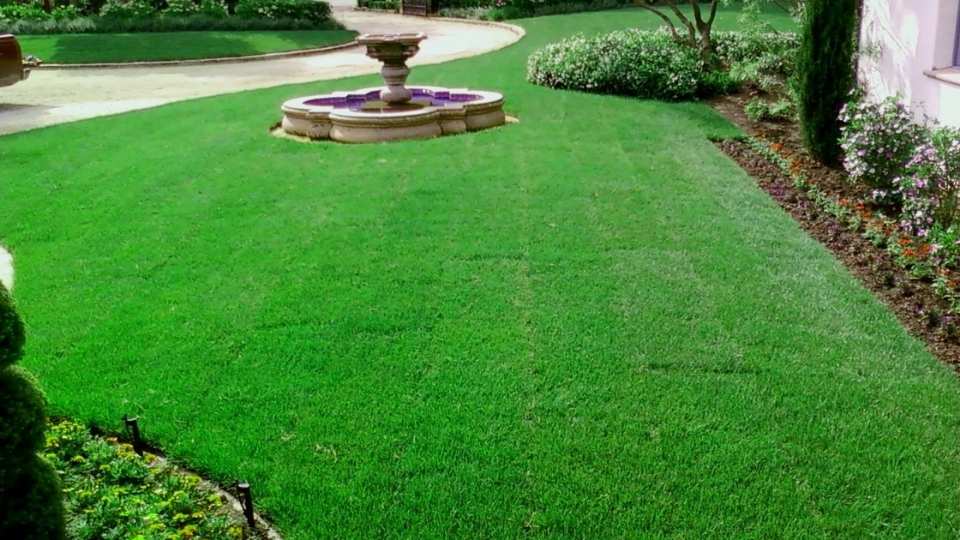
Tall fescue, known as Festuca arundinacea, is a cool-season perennial grass grown across the world. It belongs to the Poaceae family but is native to Europe. This grass grows from a tall fescue grass seed as it germinates within a week or two to full length. It requires consistent moisture for the deep root system for resilience.
Tall fescue has coarse and wide blades in dark green colour. They grow in bunches deep into the ground as they prefer cool seasons, yet they are heat-tolerant. You should maintain them regularly for a lush green look all through the seasons.
It has three unique varieties, including Turf Type Tall Fescue (TTTF), Kentucky 31 (K-31) and Dwarf Tall Fescue. To grow healthy and dense, it should be exposed to full sun but partially shaded in a well-drained soil. They grow up to 2.5-4 inches if properly aerated. You will be at an advantage after having them.
Tall Fescue is extremely drought-resistant and handles foot traffic well. It is easy to adapt to any weather and resistant to pests or diseases that increases life expectancy. You are open to growing them in lawns, sports fields, and grasslands for erosion control.
What Is Fine Fescue?
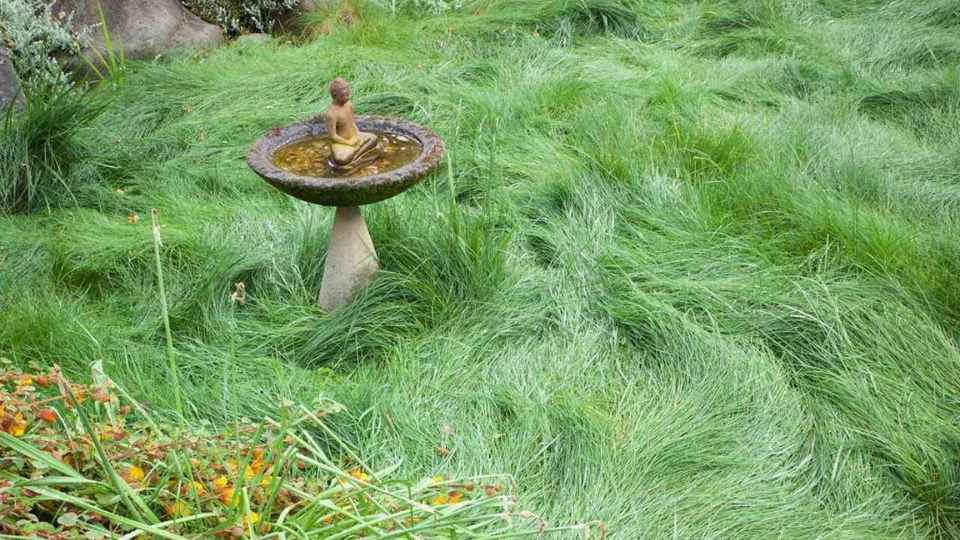
Fine Fescue, also known as Genus Festuca, is highly valued for its rich texture, climate tolerance and low maintenance.
It is a group of numerous cool-season grasses. Fine Fescue Grass includes Festuca Rubra, Festuca filiformis, Festuca brevipila and Festuca ovina. They have their own features but together, they have thin and hair-like blades from medium to dark green and, in rare cases, a blueish-green. It grows to 10-20 inches unmowed in moderately deep and well-drained soil.
They are adaptable enough to grow in poor fertility too, if the PH ranges from 5.5-6.5. It grows best in partial shade but it can also tolerate the sun for fuller growth in cool climates.
In one of the Reddit reviews, a user stated, “Fine fescue is drought resistant. It stays green when it goes dormant. You will have the added advantage or having to mow, water, and fertilise less than other grass types.” He meant that they are heat-tolerant and do not require high maintenance activities.
Fine Fescue grass seed germinates in a week or two with a low amount of fertilisers. It takes over the garden and gives a clean personality perennially. If you choose them for your yard, then it will be an excellent choice for shade tolerance which also requires no fertilisers at all. You will not have to water them all the time. With a soft appearance, it is a relevant choice for your homely space.
Key Differences Of Tall Fescue Vs Fine Fescue
Maybe all the grasses appear similar in the yard, yet there is a huge difference between Tall Fescue vs Fine Fescue Grass. They have special features and adaptability, which make them a suitable choice for specific regions. It is crucial to make a choice for the best grass for lawn if you want to have perennial greenery. These additional features not only enhance the beauty and elegance but also increase the property value significantly.
Appearance
When we compare their appearance, tall fescue has wide and coarse blades with a rough texture. These dark green blades grow in a clumpy texture to serve a bold appearance. They feel chunky over the lawn.
On the other hand, fine fescue has needle-like, thin blades but is soft to the touch. With their smooth texture, it feels like carpet rolled over the lawn for extreme comfort. Fine fescue grass feels light and delicate to visuals which feels relaxing in the early morning.
Climate Adaptability
The tall fescue grass is heat and drought-tolerant, due to its deep roots. It can survive in a humid atmosphere, as the soil should necessarily be well-drained and watered occasionally.
On the other hand, fine fescue grass is preferred mostly for cold and moderate regions, to which they perform well. It grows well in shady regions and has low heat tolerance. Herewith, drought-resistant, it goes dormant and turns brown but later gains its green colour. Fine fescue is moderately adaptable to humidity.
Shade Tolerance
Shade tolerance plays an important role in their consistent growth regardless of the weather. The tall fescue grass is ideal for a transitional climate as it requires full sun but partial shade for healthy growth. Yet, they have moderate shade performance and need the necessary exposure to sunlight of 3-5 hours a day.
Alternatively, Fine fescue performs perfectly in shade and is used mostly under the trees or areas with blocked sunlight exposure. You can grow fine fescue in dark, shady areas but not tall fescue grass.
Water Requirements
Most of the grass requires water for proper hydration, but in the case of fine fescue, it does not require watering. You can water them lightly and occasionally because overwatering can destroy their roots. It displays drought-resistant behaviour and goes brown in dry seasons but recovers instantly with minimal watering.
In contrast, Tall fescue requires watering frequently but due to moderate drought behaviour, it stays green for a longer period. This is in the best condition when the soil is moist and well-drained.
Durability And Traffic Tolerance
Choosing a grass based on traffic tolerance and durability can save you from high maintenance costs. Fine fescue is favoured for quiet and shady society gardens where it works as an ornamental feature. It can endure minimal walking. The durability of this grass is low, through which it recovers slowly.
However, tall fescue is the opposite of fine fescue. It can endure the high traffic and recover moderately in the meantime. This is perfect for parks or yards that you use often for walking and running.
Maintenance Needs
Maintenance of the grass is necessary once they are grown as scattered and uneven grass lowers the curb appeal and property value. Tall fescue grass requires moderate maintenance. It should be mowed regularly and fertilised twice or thrice a year. Make sure you don’t overseed the ground or the growth will be uncontrollable.
Conversely, fine fescue grass is the least manageable grass for your space. You don’t need to mow it or water it frequently as they can adapt to any climate easily.
| Basis | Tall Fescue | Fine Fescue |
| Appearance | Thick growth with visible, wide blades for a bold appearance | Thin needle-like blades for soft and smooth carpet-like appearance |
| Climate adaptability | For a transitional climate | For a cool, shaded and quiet climate |
| Shade tolerance | Full sunlight but partial shade required | Dark and shady areas or low-light areas |
| Water requirements | Moderately watered to maintain the hydration of soil | Occasionally watered as the roots are deep |
| Durability | Tough and takes less damage due to coarse blades | Delicate and damaged easily, takes longer to recover |
| Traffic tolerance | For active regions like parks, homes, pet parks or public gardens | For the quiet and least used places like low-light building gardens |
| Maintenance needs | Requires essential maintenance for long-lasting greenery | Requires no maintenance at all as it can adapt to any climate |
Comparison Of Tall Fescue Vs Fine Fescue With Popular Varieties
In the market of lawn essentials, there are varieties of fescue and turf grasses, not just tall fescue or fine fescue. They are known for their special features and how they get along with the atmosphere. I have seen a number of people comparing other varieties with these two.
Here, I will lay out a clear comparison of those varieties to guide you with the right choice.
Fine Fescue Vs Perennial Ryegrass
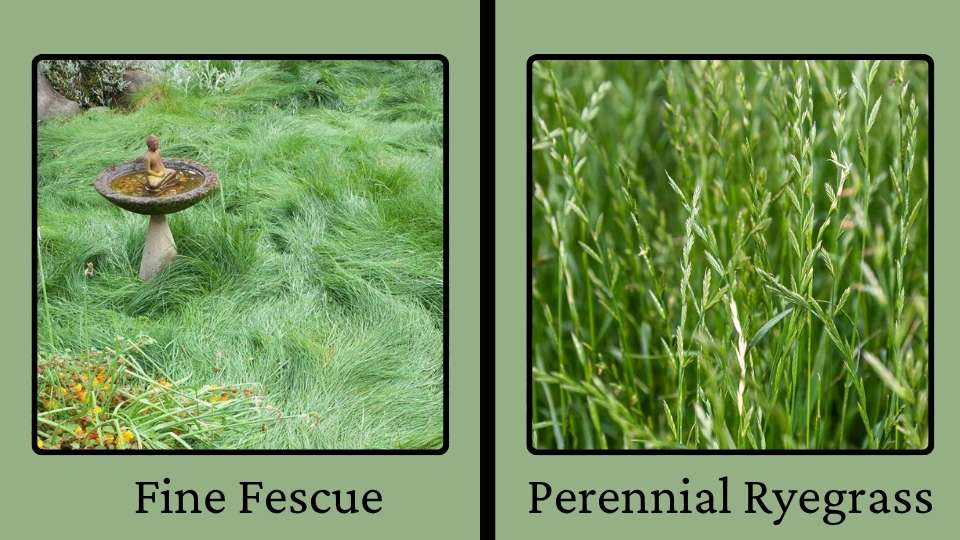
The comparison of Fine Fescue vs Perennial Ryegrass will guide you through the decision on the best cool-season grass. The fine fescue has thin and fine blades with a soft texture in the colour range from green to blueish green. It is low-maintenance and grows in shady regions due to its minimum heat tolerance.
On the other hand, perennial ryegrass has moderately thin and coarse blades in bright green colour. It is durable and takes damage easily, then recovers moderately.
You can use it on sports fields and quick lawns, which need to be maintained properly. Ryegrass grows quickly and has better durability than fine fescue.
In the end, fine fescue is best chosen for shaded lawns and low-light regions near your house, whereas perennial ryegrass is fast-growing but is durable and heat-tolerant in nature.
Fine Fescue Vs Red Fescue
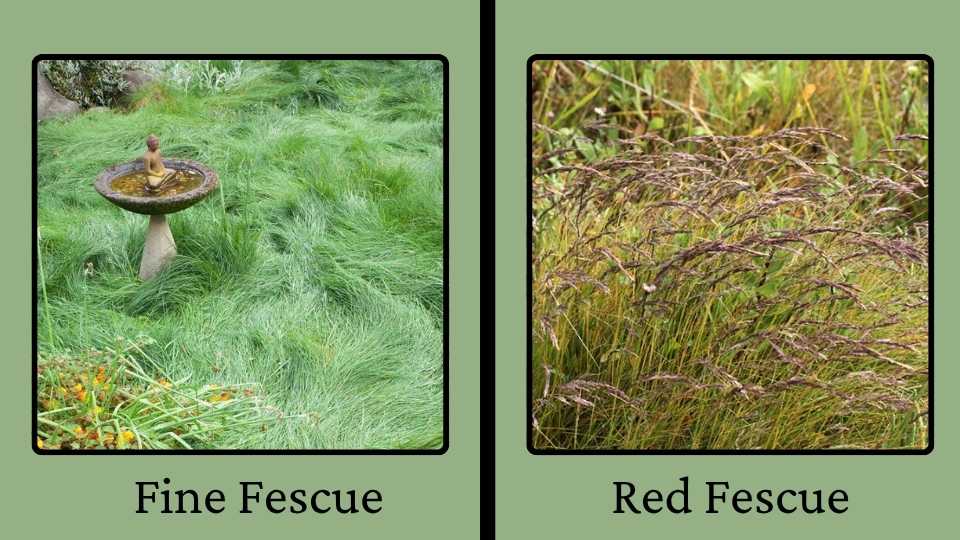
The Fine Fescue Vs Red Fescue comparison is intricate to describe when fine fescue is a group of grasses and red fescue is a part of that group. First of all, Fine Fescue grows in bunches with mixed traits of other species. It depends on the type of species that grows and spreads entirely on the lawn.
On the other hand, red fescue grows mostly creeping in a uniform pattern. It spreads faster in the lawn and has excellent shade tolerance. Choosing one of them is not a problem as red fescue will eventually be a part of fine fescue that gives you an open choice to opt for other varieties of fine fescue grass. Their mix balances the turf under the shade or low light as it is low-maintenance.
Fine Fescue Vs Kentucky Bluegrass
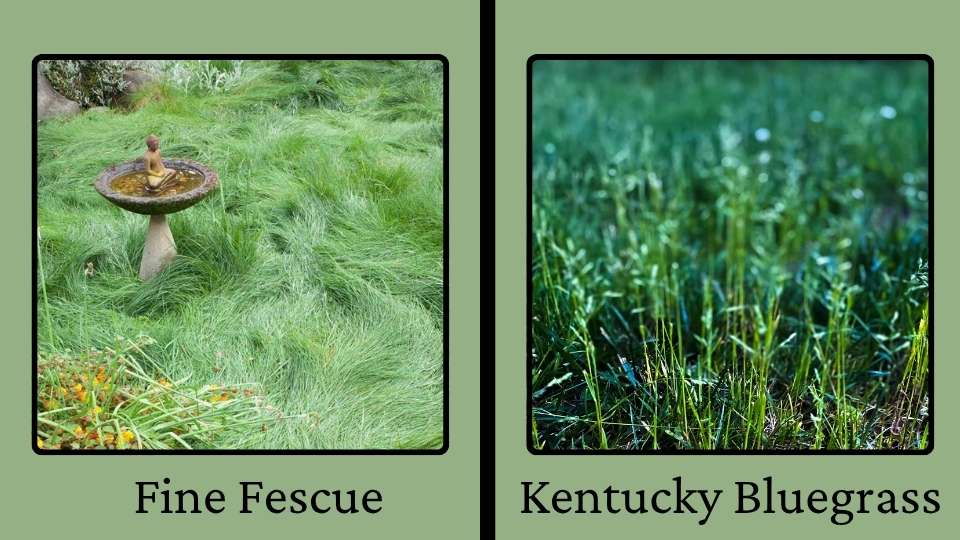
When I compared fine fescue vs kentucky bluegrass, there was a visible difference between them. Such as their appearance, growth, shade tolerance and durability, etc. Fine fescue is thin and needle-like, which is much more delicate. It grows in bunches and has low-traffic tolerance. This grass is best for shade and stays green with the least maintenance.
On the contrary, Kentucky bluegrass is dense, rich and uniform in pattern that spreads via rhizomes. It prefers to grow under full sun and needs to be maintained. Bluegrass is self-healing in nature, which makes it a perfect choice for the lawn and park. The only thing you should do is take good care of them.
Tall Fescue Vs Hard Fescue
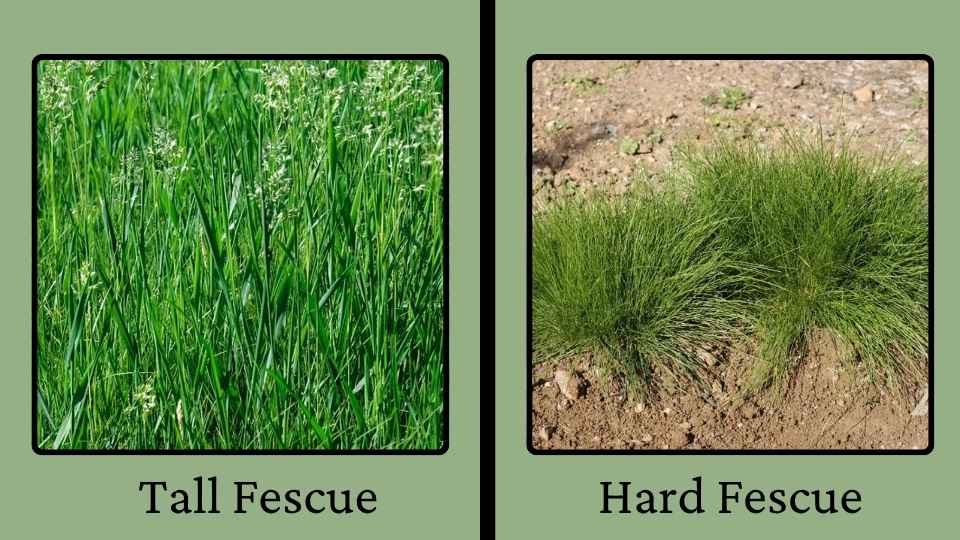
Two cool-season grasses are often compared before opting for the best, such as Tall Fescue Vs Hard Fescue. The tall fescue has coarse and wide leaves in dark green colour. They grow in bunches, 2-3 inches deep at least. Tall fescue is moderately tolerant to shade, heat, and growth. It has high traffic tolerance, which is best for active gardens and parks.
Nevertheless, hard fescue is thin and fine, mostly found in grey-green or blueish green colours. They are less cared for and with high water tolerance, they can go without watering for long.
As for hard fescue lawn and garden, it is only good for low-traffic-tolerant regions. Hard fescue also grows in bunches but best in shady areas of your house.
Which One Should You Choose?
Choosing the grass according to the requirements is a difficult task when all the grasses look identical and have pros and cons. This comparison is made due to their high availability in the market.
They are used in different climates and regions, but they must suit the atmosphere. The visual appeal of the yard comes with Tall Fescue Vs Fine Fescue Pros And Cons, which limit their application.
Tall Fescue
The tall fescue grass is a great choice for an active lawn as it is strong, adaptable and reliable. It handles the heat in a better way than other varieties. The Rhizomatous Tall Fescue is one of the tall fescues that uses an underground rhizome style to grow. It is reliable for the situation when you don’t want to put extra effort into appearance.
These grasses are grown where they can absorb the full heat of the sun and have high traffic tolerance for activities. Its cons include the high maintenance and moderate healing after the damage.
Fine fescue
The fine fescue grass is mostly grown for ornamental purposes. It is a suitable choice for regions with heavy shade like under the trees and dark regions of buildings. Fine grass is a low-maintenance choice that also works well in low water availability.
It has other varieties and chewings fine fescue is one of the best among them. It is adaptable and low maintenance, which most people prefer. There may be numerous pros but the cons include low-heat tolerance and traffic tolerance which affect its durability. You can go for this grass for the least-used space in the garden or park.
Sometimes, when tall fescue and fine fescue do not meet the requirements, the other variety is called Kentucky bluegrass. Due to requirements and suitability, it raises the comparison between Tall Fescue Vs Fine Fescue Vs Kentucky Bluegrass.
Kentucky bluegrass is considered better in such situations, as it is fine and soft in texture. It is a little high maintenance but its vibrant aesthetics make it a perfect choice for hotel lawns and parks.
Conclusion
In conclusion, choosing the right type between Tall Fescue Vs Fine Fescue will make your lawn bright and visually splendid. These cool-season grasses have their differences in texture, durability, tolerance and maintenance.
It is hard to choose at first when we don’t know about their differences and what our lawn needs.
The Tall fescue has wide and coarse blades that tolerate foot traffic and heat. It can be grown under the full sun and easily recovers from the damage done. Tall fescue is maintained for green foliage for long term but in the case of fine fescue, it can be overlooked.
Fine fescue has thin, needle-like blades that serve a smooth and soft texture. It is best grown in shady areas and is low-maintenance for long-term greenery.
With this comparison between Tall Fescue Vs Fine Fescue Grass, you will be able to choose the best grass for the active yard or ornamental garden.
If you landscape your space with proper consideration, then you can achieve aesthetic visuals while increasing the property value.
FAQs on Tall Fescue vs Fine Fescue
Ans. Both tall fescue and fine fescue are perfect but it depends entirely on the requirements of the lawn. Tall fescue is known for its durability and versatility but fine fescue is known for its premium carpet like appearance.
Ans. The disadvantage of having a tall fescue is that it is high maintenance and needs to be mowed and watered occasionally. It has a coarse texture that grows in bunches and has low tolerance to shade which makes it necessary for sunlight exposure.
Ans. Yes, you can mix tall fescue with fine fescue. It is actually considered smart as Tall fescue covering the side of yard under the full exposure of sun and Fine Fescue under the shady regions. It will ensure the green lush all the time.
Ans. Professional landscapers use a blended mix of various grass seeds for durability. In most cases, it includes tall and fine fescue, Kentucky bluegrass and perennial ryegrass. They are highly adaptable to any situation and due to their distinctive features, the yard looks rich and appealing.