


Whenever I fed my baby, he showed constant signs of bloating, gas and other digestive discomforts.
As a worried parent, I relied on the baby formula to ease their pain, but in the market, there is a controversy between Similac Sensitive Vs Total Comfort. It was a rough choice as my baby’s symptoms were unclear.
With the deliberate guidance of a paediatrician, I figured out some key differences between Similac Sensitive and Total Comfort because giving the wrong formula can cause side effects on the top.
The Similac Sensitive is used when the baby bloats or has mild gas after feeding, and Total Comfort is given when the baby cries and has constant discomfort after feeding.
When I compared these symptoms to my baby, I went for Similac sensitive, and he immediately felt relieved.
In the guide, I will simplify the choice for you in a precise comparison of Similac Sensitive Vs Total Comfort.
If you are aware of your infant’s digestion, then you will easily find the best baby formula for comfort.
What Is Similac Sensitive?
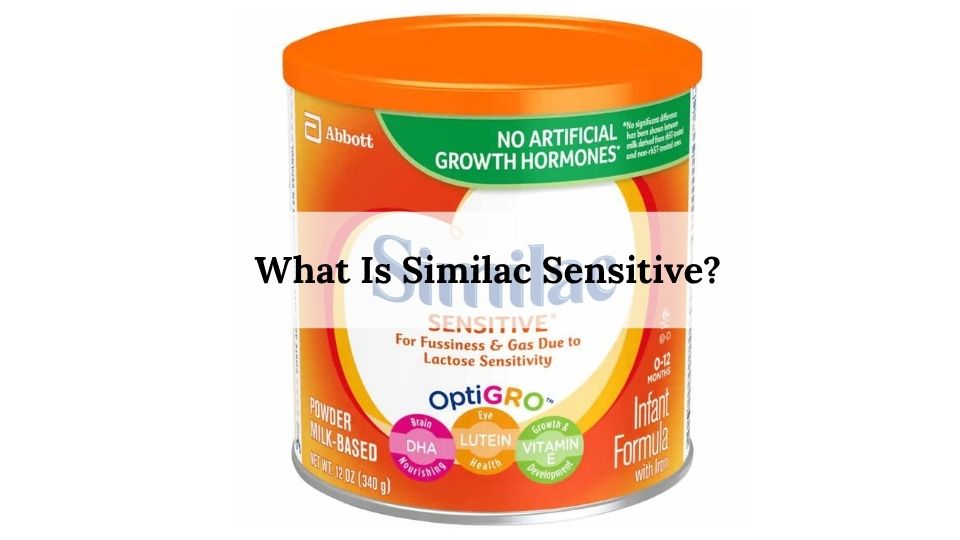
Similac Sensitive is a nutritional baby formula that eases digestive health.
It is especially designed for lactose-intolerant infants who experience gas after a feeding session.
This baby formula provides all the vital nutrients for their initial growth during their formative years.
The Similac Sensitive is mainly related to lactose intolerance in the baby, which uses intact milk proteins to ease the pain.
It is given to the infants of the age group from 0 to 1 year as a primary nutrient.
If you want the immunity of your baby to be improved along with pain relief, then using the Similac Pro Sensitive variant will prove to be worthy. It has an HMO prebiotic, which positively impacts the baby’s immunity.
The Similac Pro Sensitive and Similac Sensitive are based on the milk protein formula with whey or casein, but Similac Pro Sensitive is an immunity-boosting formula for babies under 12 months.
What Is Similac Total Comfort?

The Similac Total Comfort is a variant of Similac products that is a gentle baby formula, but for serious digestive issues.
It is often recommended when Similac Sensitive does not perform well to ease the discomfort.
Total Comfort is designed to ease the gas, split up and constant stomach ache.
When the baby cries immediately after a feeding session and feels consistent pain, then it is given.
The benefits of total comfort are beyond the comfort of constipation pain.
It improves the brain and eyes of the baby, works as a complete nutrition for physical growth and strengthens the immune system.
This formula is given to infants in the age group of 0 – 12 months with a paediatrician’s recommendation.
It works like magic for infants with sensitive digestion and lactose intolerance.
Similac Total Comfort vs Similac Sensitive: Key Differences Decoded
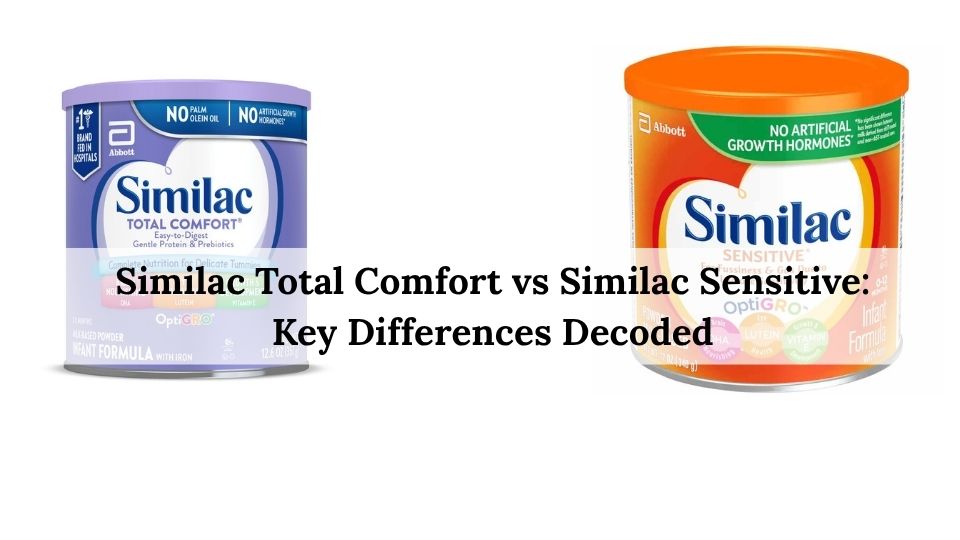
The Total Comfort and Sensitive are two variants of Similac products, designed only for infants.
They are both made up of the same nutritional formula but are used for different purposes.
Despite having the same formula, they have some major differences that indicate the right symptoms for formula dosage.
If the given formula is incorrect, it can cause some serious issues, including intense side effects.
Here, in these main differences, it will be clear to you which to prefer between Similac Total Comfort vs Similac Sensitive.
Main Purpose
Similiac Sensitive is especially designed for the lactose-intolerant babies who experience gas and fussiness after a feeding session.
It eases lactose insensitivity for easy digestion of the food.
On the contrary, the Similac Total Comfort is designed to be easily digested, which is a broken protein that eases the digestion process for babies who constantly experience gas, hard digestion and cry immediately after feeding.
Protein Formula
The protein formula of Similac Sensitive is complex, as it is good for lactose intolerant, but it has casein and whey.
Just because it is not broken down, it can be hard to digest for some babies.
Whereas, the similac total comfort is easy to digest as the protein is already broken down or hydrolysed.
Babies digest it easily and feel at ease just after consumption.
If digestion is the main symptom of the baby, then total comfort is the best.
Carbohydrate Formula
In Similac Sensitive, the corn syrup solids are used for sweetness in the baby formula that is easier to feed.
Alternatively, in a Total Comfort Similiac formula, the corn maltodextrin is used for a less sweet flavour.
As parents, we know that babies prefer sweet over bland flavours.
But we know that sweet is not always healthy, so you should choose Total Comfort over Sensitive for sweetness.
Digestibilty
The Similac Sensitive product is good for lactose-intolerant babies, so it eases digestion for such babies who suffer from the same.
It does not have a broken protein that may ease the uneasiness, but the digestion will be complex.
On the flip side, the total comfort has broken protein that can be digested steadily.
It helps infants with gas and who cry constantly after drinking milk.
When To Choose Similac Sensitive Vs Similac Total Comfort
You have read deeply about the key differences between Similac Sensitive vs Similac Total Comfort above, so it will guide you to opt for the best nutritional baby formula.
However, when is the time you should start shifting to baby formula? I was also skeptical about using baby formula, wondering if it would ease my baby’s pain and make feeding an easy task for the day.
Now, I will tell you when to choose either of the products for the baby.
Similac Sensitive
You should choose this product if the baby faces lactose-related digestive issues.
It helps ease the pain of loose stools or diarrhoea. A baby can begin having these symptoms after an illness.
The protein-based Similac Sensitive is an easy nutritional formula for lactose-intolerant babies only.
When I used it for my baby without consulting the doctor, it had minimal effect but helped me with major digestion issues.
Later, I needed to get an advancement for the same. It has almost no lactose at all, which my baby preferred.
If your infant faces the same discomfort, then you should get this one.
Similac Total Comfort
If the baby cries after immediate feeding and has discomfort because of constant gas issues.
Other symptoms include bloating, constipation and fussiness that also causes difficulty in digesting normal baby formula.
It is preferred mostly for babies with sensitive digestive issues.
The total comfort was the baby formula that helped my infant with their overall health condition. It strengthens the gut of my infant.
The partially hydrolysed protein helped with easy digestion and was gentle on the stomach afterwards.
If your infant faces the problem of overall digestion discomfort, then you should surely prefer total comfort for your infant.
Similac Total Comfort Vs Other Similac Variations

Other than Similac Total Comfort, there are other variations of Similac products, especially designed for babies.
The main Similac variations you should surely know about are Similac Alimentum, Similac Advance, Similac Pro Sensitive, Similac Pro Total Comfort, Similac Pro Total Comfort and Similac 360 Total Care.
These products have their own distinctive features to ease the life of an infant.
I will now give you a breakdown of the differences between these products.
Similac Total Comfort Vs Pro Total Comfort
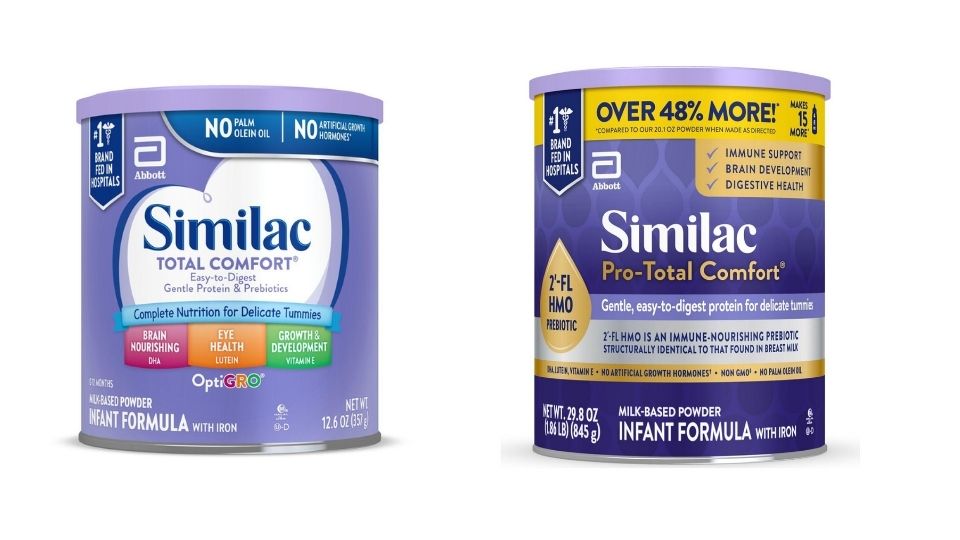
The Similac Total Comfort is an older version that provides digestive comfort to the baby.
It sometimes has HMO, while the Similac Pro Total Comfort is an advanced version that also provides immunity probiotics for a healthy lifestyle. They both work almost identically, but with minor enhancements in the formula.
The comparison of Similac Total Comfort Vs Pro Total Comfort depends on the minimal difference in probiotics.
Similac Alimentum Vs Total Comfort
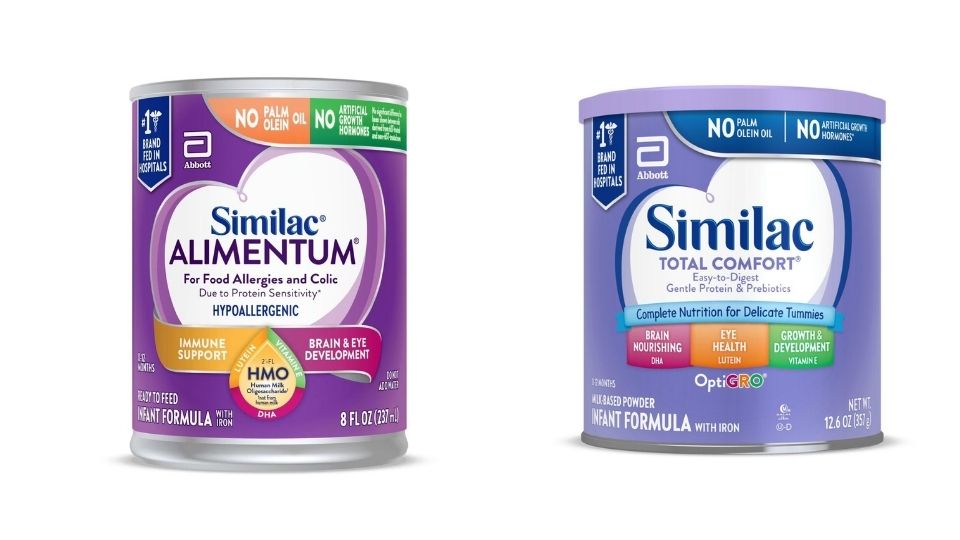
To elaborate on the difference between the Similac Alimentum Vs Total Comfort, in Similac Alimentum, the protein is extensively hydrolysed and completely broken down into small pieces, which prevents allergy.
Alimentum is lactose free and is the easiest to digest. In total comfort, it has partially hydrolysed protein that is also easy to digest with almost no lactose.
You should prefer alimentum in the case of extreme lactose intolerance in infants.
Similac Advance Vs Total Comfort
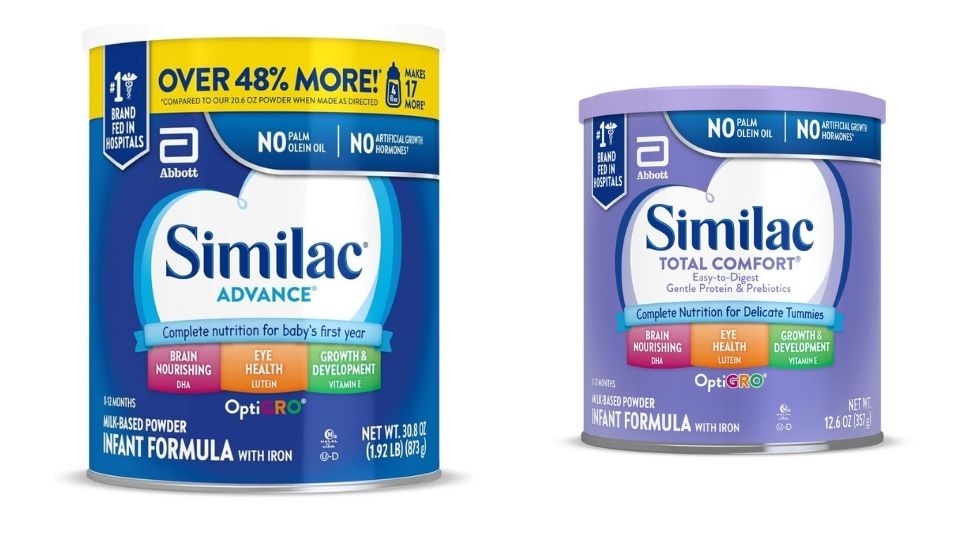
The Similac Advance is often compared with Total Comfort and Sensitive for the similar features.
In the comparison of Similac Advance vs. Sensitive vs. Total Comfort, Similac Advance is perfect for healthy infants as a daily nutrient because it has intact milk protein for healthy digestion, while Sensitive is especially for lactose-intolerant infants for easy digestion.
On the other hand, total comfort is given to infants with constant digestion issues and immediate crying. It is partially hydrolysed for smooth digestion.
Similac Total Comfort Vs 360 Total Care
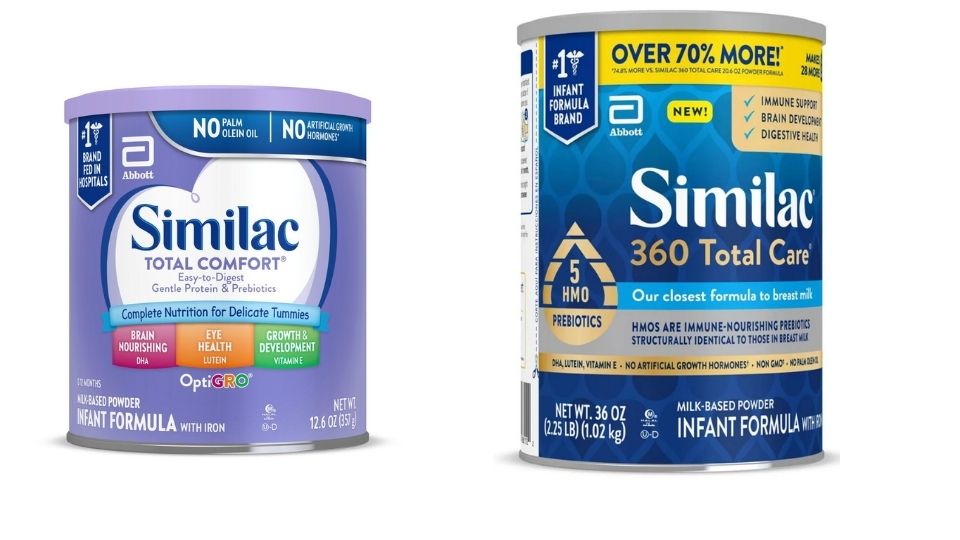
The Similac Total Comfort Vs 360 Total Care is a normal comparison of similar Similac products, but they both serve entirely different purposes.
Total comfort is for digestive issues experienced by infants due to gas, constipation or fussiness.
On the flip side of the coin, 360 total care is for the overall health of the infants.
It helps them develop their brain, immune health and gut health, which is important for a healthy lifestyle.
They are both for infants, but total comfort is for weak digestive systems, and total care is given to healthy infants.
| Basis | Total comfort | 360 Total Care | Total advance | Alimentum | Pro Total Comfort |
| Purpose | For babies with overdigestive sensitivity | For the complete nutrition of the baby | For full term general nutrition of an infant | For hypoallergenic babies with cow’s milk protein | Advanced version of total comfort for digestive sensitivity |
| Protein Type | Partially hydrolysed, easiest to digest | Has standard milk protein with whey and casein | Has intact protein | Extensively hydrolysed casein protein | Easy digestion, partially hydrolysed whey protein |
| Lactose Content | Least lactose presence | Has lactose as an energy source | Lactose similar to breast milk | No lactose at all | Low lactose is gentle for the tummy |
| Suitable Age | Best for up to about 6 months after birth | Best for the first 12 months | Best for the first 12 months after birth | Birth to next 12 months | Birth to next 12 months |
Reddit reviews on Similac sensitive vs Total Comfort
The Similac sensitive vs Total Comfort Reddit reviews will help you choose for better choice as they both are used widely by parents.
Only one review is never enough to trust a product, right? Here, I have discussed the honest reviews of the Reddit users on Similac Sensitive vs Total Comfort.
One of the Reddit users said, “Total Comfort has 100% hydrolyzed whey, no casein making it easier to digest. Sensitive has 82% casein and 19% whey, making it harder to digest. Casein is considered harder to digest. Both are lactose free despite lactose intolerance being extremely rare in babies”.
I agree with this statement as Similac Sensitive is designed especially for lactose-intolerant infants, and Total Comfort is for every infant suffering digestive distress, as it has broken protein that is easiest to digest.
Main Considerations Of Similac Sensitive And Total Comfort
When you are planning to shift to any of the baby nutritional formulas, you should consider some things, as it can lead to serious consequences if not used carefully.
Infant babies are sensitive to some of the formulas and if they are hypoallergenic in that case, they should be avoided.
Here, I have discussed the main considerations of Similac Sensitive vs Total Comfort, which will help you in implementing the use of the formula.
Identify The Real Problem
It is a vital task to identify the real problem of an infant before choosing the right protein formula.
If the baby is only lactose-tolerant, then go for Similac Sensitive.
If the baby has a serious discomfort that causes pain, then choose Similac Total Comfort.
Make sure to go for the suitable one, or else it can cause side effects.
It also took me a while to understand my baby was lactose intolerant, which made me switch to Similac Total Comfort.
Choose The Correct Type Of Protein
In Similac Sensitive, the protein present in the formula is normal but highly efficient for lactose intolerance.
On the other side, in Similac Total Comfort, the broken protein is present, which is easily digested.
It is considered perfect for the sensitive digestion of babies.
To elaborate on the type of protein used in formula, the whey protein is used in total comfort, which is hydrolysed to digest easily and casein in sensitive formula.
Adjustment Period
An adjustment period is really important to properly observe.
When I tried baby formula on my baby, he took at least 2 weeks to adjust to it. As a regular user of baby formula, every baby has their own adjustment period. What suits one baby may not necessarily suit the other baby, too.
They normally take almost 2-4 weeks for any of the formulas to respond.
As I said before, my baby took almost two weeks to adjust to total comfort after the switch.
Check For Symptoms After Feeding
After feeding the formula, some babies may suffer from hyperallergy or any physical changes like rashes, blood in stool and vomiting.
These symptoms can get worse if not taken care of within the adjustment period.
You should consider seeking advice from a doctor before continuing on the baby formula.
When I used Similac Sensitive at first, he showed me symptoms that made me careful to always check symptoms for future preferences.
Seek The Guidance Of A Paediatrician
When you switch to Similac, you should take a paediatrician’s guidance to choose the relevant product.
Seeking the proper recommendation will give your baby a nutritional diet.
They have nutrients like DHA, protein, vitamins, minerals and iron.
These elements help an infant with the initial growth.
If you observe any negative impacts after feeding, then make sure to seek guidance.
Conclusion
At the end of the comparison ofSimilac Sensitive vs. Total Comfort, as a concerned parent of your infant, you must be confused about which formula is better and healthier.
You are not alone in this feud of choosing the best for your child.
They are both used for almost the same purpose, but some minor differences affect the impact of the product.
If your infant has lactose intolerance, then choose Similac Sensitive.
For digestive distress with weak gut health, go for Similac Total Comfort. Not just these varieties, but Similac has numerous baby formulas to make feeding easy.
You have a choice of variations between Similac 360 Total care, Similac Alimentum, Similac Pro Total Comfort and others.
Make sure to take paeditarican’s advice for the well-being of the infant.
Every child is different, and so are their needs. You don’t have to choose between Similac Sensitive vs. Total Comfort.
You should go for a formula that suits your infant without any side effects.
FAQs on Similac Sensitive Vs Total Comfort
Ans. Similac sensitive is not hard to digest, but it is perfect for lactose-intolerant infants who experience mild gas and digestive issues. The Similac Sensitive has milk proteins that ease the pain and make the infant feel relieved.
Ans. Similac Total Comfort is used when the baby cries immediately after a feeding session and experiences constant stomach pain. When the fuzziness and the loose stools are noticed along with these symptoms.
Ans. if your infant faces digestive issues and gas but your kid is extremely lactose intolerant, then it’s your call to use Similac Sensitive formula. It helps children with gas and makes them feel relieved. It may take them 2-3 weeks to adjust, but the result will be worth it.
Ans. The main side effects of Similac Total Comfort include loose stools sometimes, minor gas or constipation. Normally, these symptoms do not appear in the infant, but in the adjustment period of the formula, babies can face some physical symptoms like rashes, vomiting or whelling.