

Waterproofing of the house is one of the most important things to do before finalising the construction. I discovered this when I had to start the waterproofing of my own home. While researching, the comparison between Radonseal Vs Drylok kept on coming up.
Both are waterproofing solutions, but understanding the difference between them can make a major impact on the safety and durability of a house.
Radonseal deeply penetrates into the concrete securing the wall for decades, while Drylok works more as a barrier sealant for the wall as it stays on the surface.
Even with a good reputation people wonder, Does Radonseal Work? Based on my own experience and research, it has proven to be a long-term effective solution under the right conditions.
In this guide, I will let you know the major differences between them so that you can make your choice as per the conditions of your home. Choosing between radonseal vs drylok is a one-time investment, and making the correct choice can help prevent costly problems later.
You May Also Like:
What Is Radonseal?
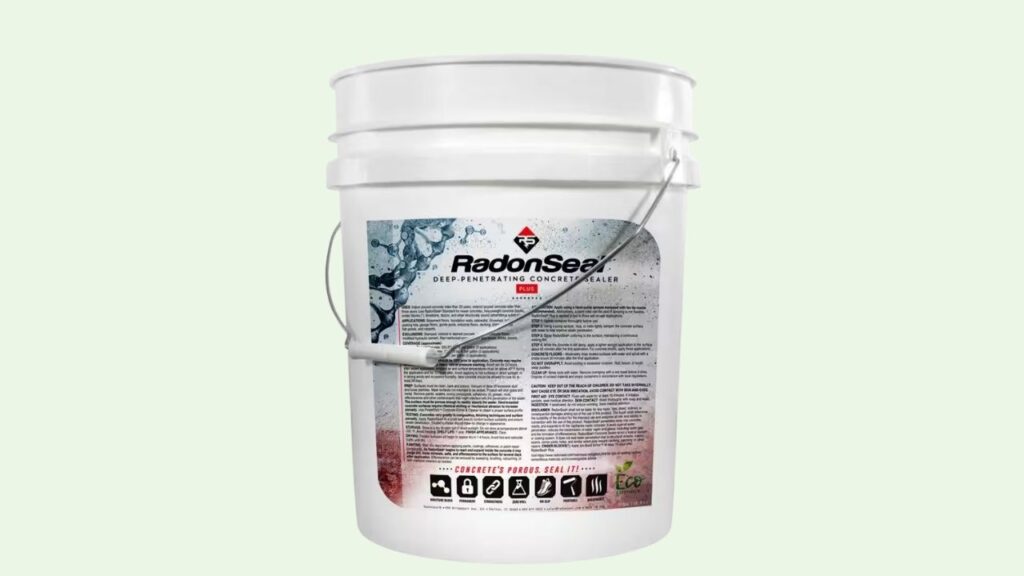
Radonseal is a sealer that deeply penetrates the basement, foundation or floor as it is beneficial for waterproofing, strengthening and protecting.
Unlike other coatings or paints, Radonseal Concrete Sealer is not the type to stay on the surface but binds within the concrete and makes a strong bond. This sealer works like a permanent sealant, which is also waterproof and endures water leakage and moisture vapour.
Using radonseal in your home strengthens the concrete layer below and also reduces the radon gas. It is such an eco-friendly option that allows concrete to naturally dry and stiffen. There is no odour in this sealant that is usually used on basement walls/floors, crawl spaces, garage floors, on driveways, pathways or sidewalks.
It contributes to moisture seepage, concrete dusting and efflorescence. Radonseal works smoothly against the hydrostatic pressure and lasts for a lifetime. Additionally, it does not wear off or easily wash away. You just have to make sure that it is applied only on bare concrete that is properly prepared.
What is Drylok?
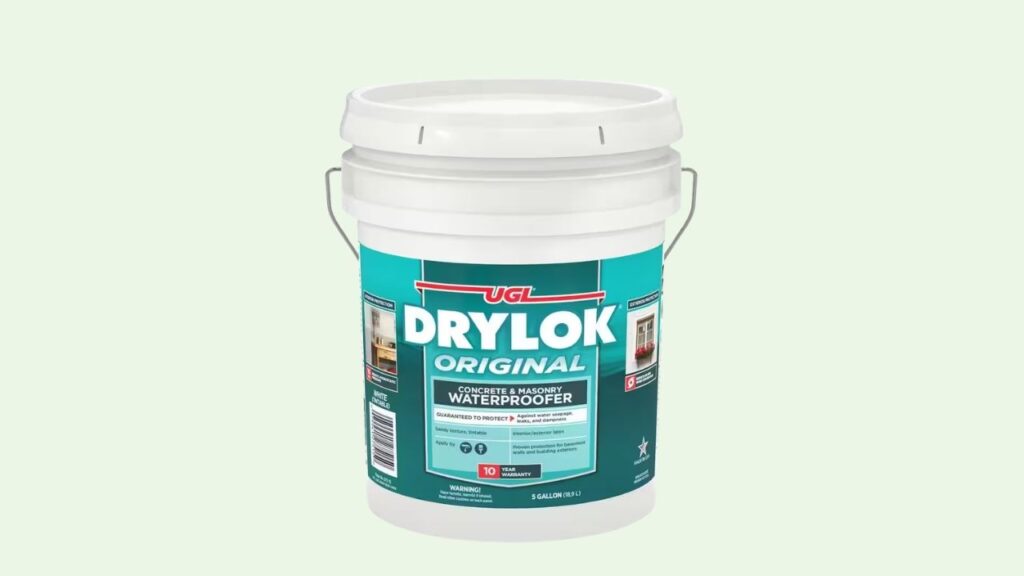
Drylok is a masonry waterproof coating that is used on basement or foundation walls/floors to protect concrete, brick or block walls. It is used to block water leakage, protect against moisture or dampness and also improve the appearance of the wall.
Drylok is applied on the wall, unlike other paints, in a thick coating. Such a coating is a water-resistant layer to block any kind of liquid from entering but it is still breathable.
There are four main types of Drylok – Original, Extreme, Clear and Floor & Wall. It has several features like waterproofing, easy application and mould resistance. Drylok is widely available and normally applied on below-grade surfaces like concrete, garage, store, basement, foundation or cider walls.
It is best for the walls that are slightly damp but do not have strong water pressure on them. Drylok is considered more of a moisture control paint than a full waterproofing layer like Radonseal.
Key Differences Of Radonseal Vs. Drylok
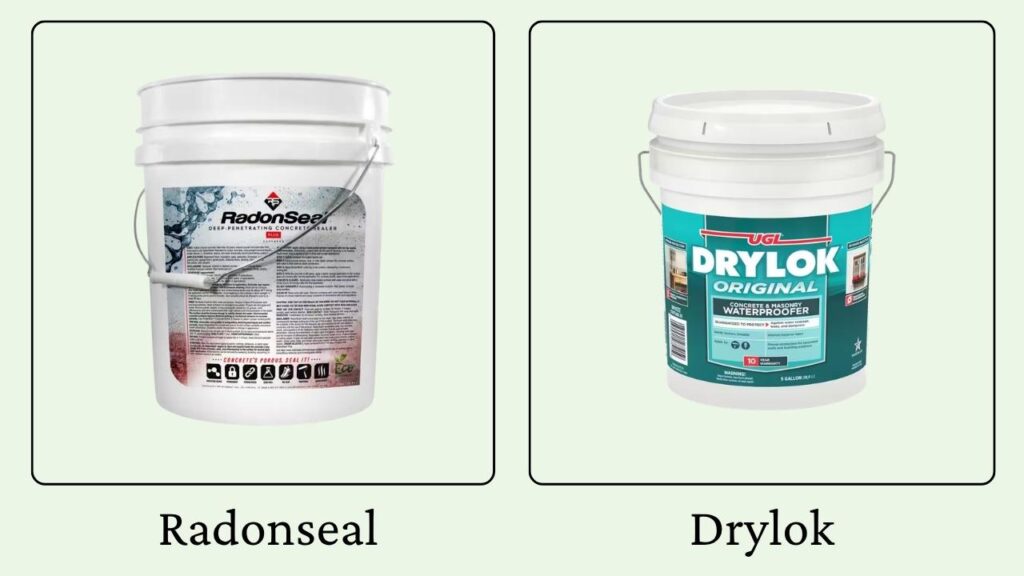
Radonseal vs Drylok for basement walls may work similarly but they still have plenty of differences that make them irreplaceable to each other. With the distinctive features, they made their mark in the market of sealants and coatings. Now, I will tell you about these differences one after another to make your decision worthy of every penny.
Penetration Vs Surface Coating
Radonseal Vs Drylok is a common confusion when we go for sealants for the wall. Radonseal concrete sealer deeply penetrates into the concrete and becomes one with it but Drylok is used on the surface of the concrete and stays there for decades.
In the case of Radonseal, it soaks into the concrete pores up to 4 inches and forms crystals to block the leakage. As it becomes one with the layer, it still seeps the vapours but can not be peeled off.
On the other hand, Drylok is a surface coating that is applied in a thick layer to create a firm layer to block the leakage and moisture control.
Longevity And Durability
When we compare them in terms of their longevity or durability, they have a huge difference in timeline. Radonseal lasts at least 15-20+ years but is nearly permanent if applied carefully.
It does not chip or peel like others and strengthens the concrete over time as per radonseal plus reviews. The durability of Drylok surface coating varies in different situations.
It stays like a thin layer over the wall and controls moisture and constantly changing temperature. This layer can fail if it peels/ blistering, cracking and delamination. Drylok layer lasts 5-10 years as compared to Radonseal.
Application Process
The RadonSeal sealant is applied in some steps. First of all, prepare the surface and make it pre-wet. Then apply it smoothly on the surface by sprayer, roller or pour and spread in layers. After the first application, you should let it absorb until it is applied.
When Drylok is applied, it is done in a thick coating after prepping the surface and allowing it to dry. After one layer, recoat it with another and let it dry once again, then cure it. With these simple steps, you can easily apply them to your wall.
Breathability
The breathing of the wall through Radonseal is much better as it seals the pores against liquid water, yet water vapour can diffuse easily. It easily lets the vapours out, increasing the durability of the wall. Thick pores of concrete become water-resistant but not vapour-tight to let the wall breathe.
On the other hand, Drylok is moderately breathable and forms a membrane to block liquid water, but it also controls the vapour movements. Using the breathable sealant is important, as it reduces hydrostatic pressure but can form bubbles or blisters.
Appearance/Finish
Their appearance is unique and gives a noticeable finish. Radonseal gives a standard look that looks exactly the same after the application. It slightly darkens the surface and can eventually reduce the dusting and tighten the surface to protect the outer layer.
In the case of Drylok, it completely covers the surface and often appears matte or sometimes textured. People consider using it in white colour but if you can add tints for different shades. It gives a uniform appearance that most people prefer. It hides stains and imperfections from the previous coating.
Cost
Radonseal is expensive and lasts at least 10-20+ years. For a porous surface, it may increase the cost significantly. It includes no maintenance cost at all. Once it is applied perfectly, it does not require any care.
However, when we apply Drylok, its upfront cost is low, but if you coat it twice, the cost increases quickly. Drylok requires maintenance to stay longer on the surface. There is a risk of recoating as it wears off within 5-10 years.
| Basis | Radonseal | Drylok |
| Absorbtion | It deeply penetrates the concrete and fills the pores. | It is a surface layer that sits there to protect from moisture and water |
| Durability | Lasts 15-20+ years | Lasts 5-10 years |
| Application | Applied on a damp layer of the wall until it penetrates deep into the wall and becomes one | Applied on dry concrete wall in layers to protect from moisture |
| Breathability | Highly breathable | Moderately breathable |
| Appearance | Looks standardised after applying | Looks matte and textured |
| Cost | Has a high upfront cost but does not require maintenance | Has low upfront cost but requires maintenance |
Radonseal Vs Drylok: Pros And Cons
When we compare Radonseal vs Drylok, they come with a few advantages and disadvantages. There are some people on reddit has been reviewing the product, and on multiple Radonseal vs Drylok Reddit threads, users mostly have mixed reactions that show its positive and negative features.
In the context of Radonseal, it is advantageous for longevity on the wall and stays breathable, which is a major reason to get this one. It does not peel, flake or delamination by the time and strengthens with a concrete layer. Radonseal stays invisible, being odour-free.
If we count its disadvantages, it has limited hydrostatic pressure even the application is tricky for beginners. Radonseal works well only on good-quality concrete but it does not make any visible improvement in appearance.
Drylok is advantageous in terms of hydrostatic pressure by blocking the water at the surface. It improves the appearance by covering stains, discolouration and masonry. This easily applied paint is used well on the interior and exterior of the house and easily handles minor leakage.
As for the disadvantage, it has limited breathability and sometimes peels or has blisters. Drylok is not permanent but risks in increasing of cost due to regular maintenance.
Making The Right Choice: Radonseal Vs Drylok
The choice for the sealant depends on the requirement and the condition of the wall. The radonseal vs drylok are being compared to choose the right option for your home. Th wall with flawless finish looks elegant and attractive. If you make a right choice, it will eventually make a huge impact in your home and its wall.
If your first choice is radonseal for your walls, then it is a durable one but with high upfront cost. It is also a safer choice as it does not peal or need any maintenance. Even its varieties are often put into comparison to decide on the better.
The radonseal concrete sealer has high absorption capacity if you prep it before application. It is used when you require something longlasting and smooth without much change.
If you go for Drylok, it is for temporary surface coating that lasts 5-10 years with low-breathability. There is a high peeling risk and requires high maintenance. It is often compared between its own varieties such as drylok extreme vs original.
You should paint it well as it finishes with matte touch. The high adhesion of the paint makes it a nice choice. But you should choose this only when you are staying in home temporarily.
Conclusion
Now that we have been through the debate of radonseal vs drylok, it is a clean choice of radonseal. In some homes with dry weather or occasional rain, you should use drylok there for safety in case. Waterproofing increases the durability of the house from external factors like rain, moisture, seeking and moulding, etc.
Along with protection, breathability and surface coverage, it also works well for appearance. In such cases on finish, it is better to go for Drylok.
It gives matte finish and sometimes has variety of textures for the wall to complement the background but it sometimes requires maintenance after a point of time. A better house is something that feels intimate, warm and comfortable but with longevity that they provide.
In the end, you should choose something that keeps your house protected, whether it is radonseal vs drylok. They both offer their unique features along with timeless waterproofing.
FAQs on Radonseal Vs Drylok
Ans. Drylok stays on the surface which is less efficient for some homes. The deep penetrating sealants like radeonseal or other flexible sealants will provide better protection from moisture or damage.
Ans. The best concrete sealer for radon are radon standard and plus. They deeply go into the concrete layer and diffuse with the wall to become one with it. It is silicate based sealer which is best for high porosity.
Ans. The Drylok is advised not to use on the basement wall as the layered surface often caught vapours and moisture within the wall. It leads to potential mould growth and efflorescence. With increased hydrostatic pressure, it cracks and breaks at some point.
Ans. The drylok requires at least two coats of the paint to ensure the perfect waterproofing for years. If the layer is not uniform or entirely, it can later potentially be cracked or can not handle hydrostatic pressure